Shopping Cart
There are no more items in your cart

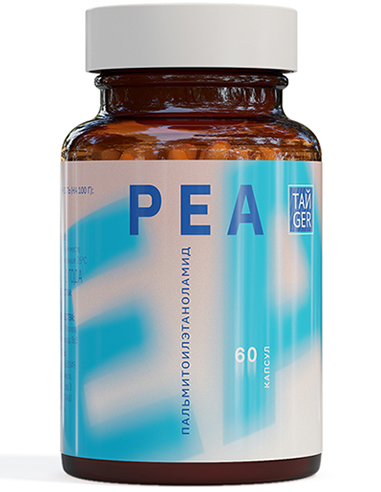


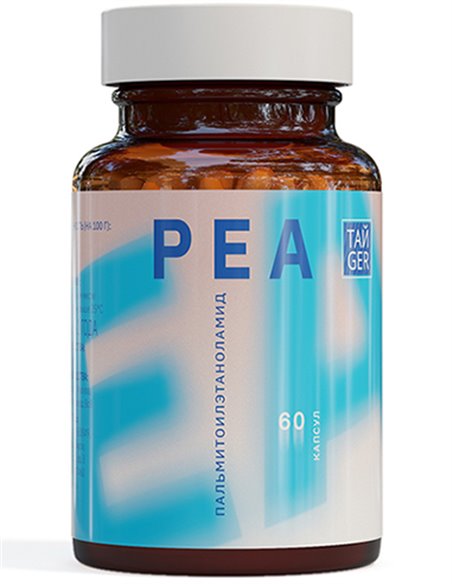
Palmitoylethanolamide (PEA) is an endogenous lipid mediator belonging to the N-acylethanolamine family of fatty acid amides. It has anti-inflammatory, analgesic, immunomodulatory and neuroprotective effects. It acts both at the protein level (PPAR alpha and others) and at the level of gene regulation responsible for the synthesis of inflammatory and pain mediators.
Palmitoylethanolamide is produced in the body on demand as a protective response to injury, inflammation, pain and is found in all tissues, including the brain. PEA levels are usually elevated in painful conditions and stress.
However, the amount of endogenous PEA is usually insufficient to counteract the constant allostatic load present in chronic inflammation, so taking it in the form of supplements can help replenish endogenous PEA levels, restore its protective, anti-inflammatory and analgesic effects.
The main mechanisms of action of PEA are due to its effect on PPAR-α receptors (nuclear receptors activated by peroxisome proliferator-activated receptor alpha) and the endocannabinoid system (direct effect on cannabinoid receptors associated with G proteins GPR55 and GPR119, and indirect effect on cannabinoid receptors CB1 and CB2).
PEA is characterized by:
Anti-inflammatory and immunomodulatory properties
Modulates inflammatory reactions by influencing immune system cells (regulation of macrophage and microglial cell activity, control of mast cell degranulation). Reduces the production of pro-inflammatory cytokines and inflammatory mediators. May increase non-specific resistance of the body to bacteria and viruses. Can maintain the intestinal barrier, reduce intestinal permeability and inflammation in the intestine, reduce the production of pro-inflammatory cytokines and immune infiltration.
Analgesic properties
Reduces pain sensations in various ways by modulating the activity of nervous system cells and reducing inflammation. In addition to influencing the endocannabinoid system, it activates and desensitizes the channels of the transient receptor potential of the vanilloid receptor 1 (TRPV1), thereby reducing pain perception (antinociceptive effect).
Neuroprotective properties
Associated with the ability of PEA to change the activation of mast cells, microglia and astrocytes - the main inflammatory cells involved in neuroinflammation. Neuroprotective properties also include inhibition of apoptosis and autophagy, protection from excitotoxicity, modulation of synaptic homeostasis, and promotion of neurogenesis.
As an analgesic and anti-inflammatory agent, palmitoylethanolamide (PEA) may be useful in chronic and episodic pain, including neuropathic pain, pain after injuries and surgeries, inflammatory joint diseases, irritable bowel syndrome, allergic reactions, neurodegenerative disorders, to relieve symptoms caused by chronic diseases, to improve cognitive functions.
Directions for use: one capsule 1-2 times a day regardless of food.
Composition: One capsule contains lyophilisate of an aqueous solution of Indian almond (Terminalia catappa) 300 mg (of which palmitoylethanolamide 300 mg), hydroxypropyl methylcellulose (carrier), magnesium stearate and silicon dioxide (anti-caking agents).
Packaging: glass bottle.
Storage conditions and periods: in a cool dark place at a temperature not exceeding 25 ° C. Shelf life is 2 years.

Tap to zoom