Shopping Cart
There are no more items in your cart
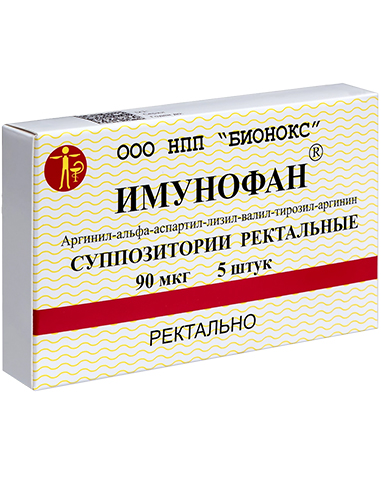



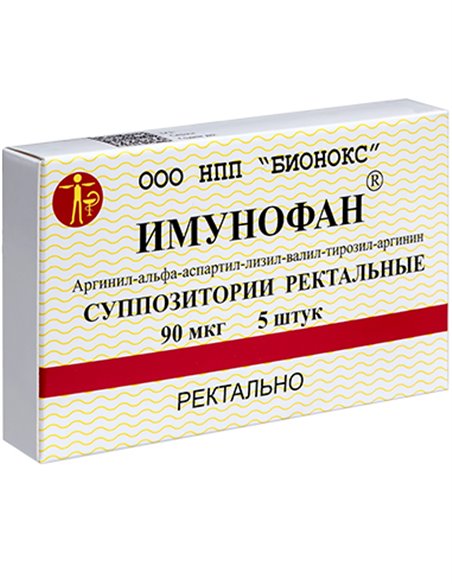
The drug has an immunoregulatory, detoxifying, hepatoprotective effect and causes inactivation of free radical and peroxide compounds. The pharmacological action is based on achieving three main effects: correction of the immune system, restoration of the balance of the body's oxidative-antioxidant reaction and inhibition of multiple drug resistance mediated by proteins of the cell's transmembrane transport pump.
It is used in adults and children over two years of age for the prevention and treatment of immunodeficiency and toxic conditions, chronic inflammatory diseases of various etiologies. In adults, as an adjuvant in vaccination against bacterial and viral infections.
As a result of activation of phagocytosis, a short-term exacerbation of foci of chronic inflammation, supported by the persistence of viral or bacterial antigens, is possible.
The drug does not affect the ability to drive vehicles or operate machinery.
The action of Immunofan does not depend on the production of PGE2 and the drug can be prescribed in combination with anti-inflammatory (steroid and non-steroid) drugs.
Method of administration and dosage
Rectally. Single and daily dose - 100 mcg (1 suppository).
In the treatment of cancer patients in the radical combination treatment regimen (chemoradiation therapy and surgery):
- once daily, a course of treatment of 8-10 suppositories before chemoradiation therapy and surgery, followed by continuation of the course during the entire period of treatment.
In patients with a widespread tumor process (stages III - IV) of various localizations in the form of complex or symptomatic therapy:
- once daily, a course of treatment of 8-10 suppositories, with a break of 15-20 days and repetition of courses during the entire period of subsequent treatment.
In children with malignant diseases of the hematopoietic and lymphoid tissue:
- 1 time per day, daily, course of treatment 10-20 suppositories. The drug should be administered throughout the course of chemoradiation therapy and after the end of the course to prevent the development of toxicosis.
In the complex therapy of children with papillomatosis of the larynx and oropharynx:
- 1 time per day, daily, course of treatment 10 suppositories.
In opportunistic infections (cytomegalovirus and herpes infection, toxoplasmosis, chlamydia, pneumocystosis, cryptosporidiosis):
- 1 time per day, daily, course of treatment 15-20 suppositories.
In the complex therapy of HIV infection:
- 1 time per day, daily, course of treatment 15-20 suppositories. If necessary, repeat courses should be carried out after 2-4 weeks.
In chronic viral hepatitis and chronic brucellosis:
- 1 time per day, daily, course of treatment 15-20 suppositories, to prevent relapse, repeat courses should be carried out after 2-3 months.
In diphtheria:
- 1 time per day, daily, course of treatment 8-10 suppositories. In case of diphtheria carriage - 1 time after 3 days - 3-5 suppositories.
In the treatment of III-IV degree burns with toxemia, septicotoxemia, in surgical patients with septic endocarditis, long-term non-healing wounds of the extremities, purulent-septic complications:
- 1 time per day, daily, course of treatment 7-10 suppositories, if necessary, the course of the drug should be continued up to 20 suppositories.
In case of broncho-obstructive syndrome, cholecystopancreatitis, rheumatoid arthritis:
- 1 time after 3 days, a course of treatment of 8-10 suppositories, if necessary, the course should be continued up to 20 suppositories at the same interval.
In the treatment of psoriasis:
- 1 time per day, daily, a course of treatment of 15-20 suppositories.
In adults in the vaccination prophylaxis regimen, once on the day of vaccination.
Composition: arginyl-alpha-aspartyl-lysyl-valyl-tyrosyl-arginine diacetate (in terms of anhydrous and acetic acid-free substance) 90 mcg
Excipients: glycine (5 mg), polysorbate 80 (1% of the suppository weight), purified water (25 mg), solid fat (up to obtaining a suppository weighing from 1.2 to 1.5 g)
Contraindications
Hypersensitivity, pregnancy complicated by Rh-conflict, children under 2 years of age.
Pregnancy and lactation:
During pregnancy and breastfeeding, use only if the expected benefit to the mother outweighs the potential risk to the fetus and child.