Shopping Cart
There are no more items in your cart

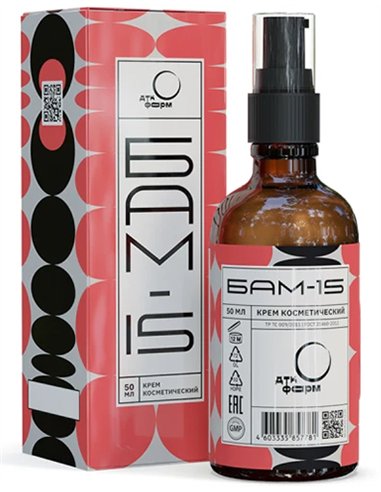


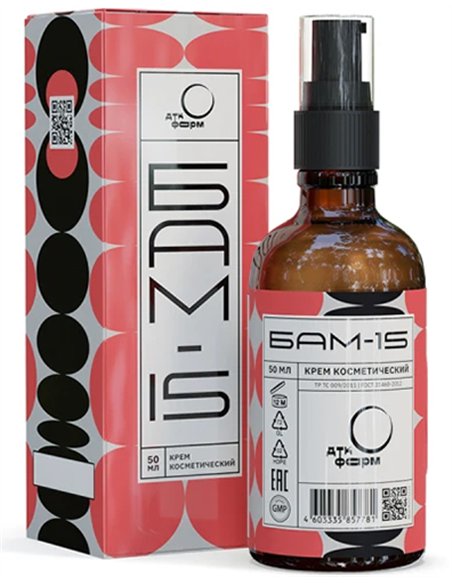
BAM-15 cream is a latest-generation mitochondrial protonophore with two different effects and dosage formats.
Dopamine pathway:
stimulation of dopamine and norepinephrine production;
a positive and balanced mood for several days;
greater resilience to stress, easier and more proactive communication;
increased motivation and joy.
In this dosage format, BAM-15 should be applied once a week, 3-5 pumps (1-3 pumps for older adults) to the abdomen or any other part of the body with good blood flow. Subcutaneous fat in the abdomen will act as a good natural buffer for BAM-15, providing a gentler and longer-lasting effect, but you can also try applying the cream to other parts of the body.
The recommendation to limit frequency of use is due to the peculiarity of the dopamine system—it does not like to be overused. Daily use can lead to the dopamine system becoming resistant to this effect.
Local fat burning pathway:
increased local thermogenesis;
increased local adipose tissue drilling;
visual fat burning effect in problem areas;
local reduction in insulin resistance and inflammation;
promoted reduction in the number of senescent cells.
In this format, BAM-15 should be applied 1-3 times daily to areas requiring tissue remodeling.
Mechanism of action
BAM-15 belongs to the class of protonophores, uncouplers of the mitochondrial electrochemical gradient. Our bodies contain uncoupling proteins. They are activated by various factors (usually cold) and promote mitochondria to burn more energy, which is largely dissipated as heat. The best-known uncoupling protein is thermogenin (UCP1), which allows mammals to warm up in the cold without shivering. More details can be found in the podcast on protonophores.
This mechanism has two important consequences:
the production of dopamine and norepinephrine (as a side effect of this mechanism);
local changes in adipose tissue (its drilling), when the fat cell increases its mitochondria, leading to visual drilling of the cell.
This mechanism also has a number of mitoprotective, anti-aging, nephroprotective, neuroprotective, and other properties described in the literature.
Possible Combinations
BAM-15 will combine well with the following products:
mitochondrial creams CC-31, AM-111, P110;
nootropic products (primarily Mix 55 and Epobis);
vascular agents (primarily the A-Pro line).
Potential risks and precautions
Problem:
Catecholamines (especially norepinephrine) can constrict blood vessels. Norepinephrine can increase blood pressure, which is a risk factor for people over 60 with poor vascular health.
What to do:
In this case, BAM-15 intake should be limited to one application per week or not used at all. This is only possible if vascular wall elasticity is unsatisfactory. To balance these effects, we recommend products from the A-Pro, Mix 55, and Ebis lines.
Problems with other forms of BAM-15:
Protonophores, and BAM-15 in particular, are rather capricious substances; the recommended storage temperature is -20°C;
Safe protonophores and BAM-15 do not work without other cofactors;
BAM-15 is found in the mitochondria of adipose tissue, and although the molecule has some oral bioavailability, it still requires transport elements for effective function;
Many dosages found online are critically overestimated and potentially dangerous.
Solution:
Our liposomal cream formulation addresses all of the above issues. BAM-15 cream contains stabilizing redox molecules and other factors that ensure its effectiveness throughout its shelf life and ensure its safety.
Directions for use:
To target the dopamine system, apply 3-5 pumps (1-3 pumps for older adults) to the abdomen or any other well-perfused area once a week;
To remodel adipose tissue, apply 1-3 pumps daily to the desired area.
One bottle contains approximately 140 pumps.
Ingredients: water, caprylic-capric triglycerides, emollient temest, sorbitan stearate, ascorbyl palmitate, sucrose stearate, behenyl alcohol, sunflower phospholipids, xanthan gum, BAM-15, ethylhexylglycerin, phenoxyethanol.

4603335857781
Tap to zoom