Shopping Cart
There are no more items in your cart

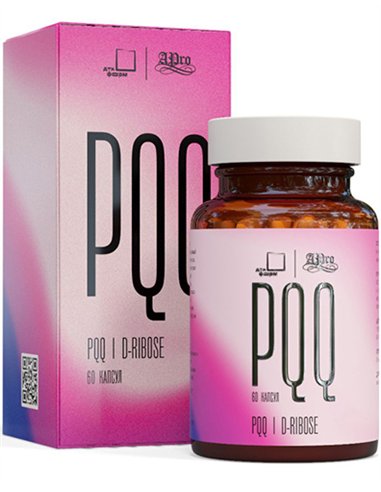


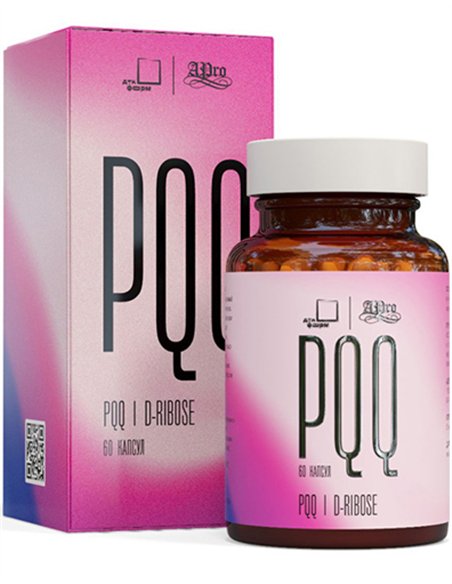
PQQ with D-ribose (A-Pro line) is a product that supports mitochondria, which are responsible for energy production and metabolism. It helps protect mitochondria from age-related and oxidative damage. It supports brain, heart, vascular, liver, and immune function.
PQQ with D-ribose from the A-Pro line is designed to provide comprehensive support for mitochondria—important cellular organelles responsible for energy production and the regulation of cellular metabolism.
Mitochondria are our energy source. Their proper and healthy functioning ensures a clear brain, a strong heart, an active liver, eggs capable of fertilization, and motile sperm. Mitochondrial dysfunction is closely linked to numerous dysfunctions, age-related changes, and serious diseases, including neurodegenerative diseases.
Pyrroloquinoline quinone (PQQ, vitamin B14) is effective in supporting mitochondria, as confirmed by numerous studies.
PQQ is unique in its ability to function in redox systems multiple times (up to 20,000 times) as a regenerating quinone-quinol redox pair. In comparison, vitamin C functions in this manner only four times.
Thanks to these powerful antioxidant properties, PQQ effectively protects mitochondrial DNA and mitochondria as a whole from free radical damage, helps mitigate mitochondrial dysfunction associated with aging, maintains optimal metabolic activity, and stimulates the formation of new mitochondria.
Therefore, PQQ has a wide-ranging positive effect on the body.
In relation to the nervous system, it can:
increase the ability of brain tissue to regenerate, including after traumatic brain injury and stroke;
Stimulate nerve growth factor (NGF), which is responsible for neuronal myelination;
Improve memory, enhance cognitive abilities and endurance, improve sleep, and slow age-related decline in brain function;
Inhibit β-amyloid aggregation and fibrillation, helping to prevent neurodegenerative disorders (Parkinson's, Alzheimer's, and dementia);
Reduce neuroinflammation;
Mitigate memory impairment and neurotoxicity, and reverse changes in the hippocampus.
PQQ also plays an important role in the cardiovascular system. It can reduce the area of infarction damage (demonstrated in animal experiments) and myocardial damage from high blood pressure overload, improve pulmonary hypertension, support cardiac function as a cardioprotector, and minimize the development of chronic heart failure.
Through a mitochondrial-dependent pathway, PQQ induces cancer cell apoptosis, which may be beneficial in oncological diseases. It also exhibits minimal or no toxicity to normal cells. It helps prevent ovarian dysfunction associated with chemotherapy with alkylating agents, which cause significant harm to these reproductive organs.
PQQ also:
prevents liver inflammation in obesity and non-alcoholic fatty liver disease;
improves insulin sensitivity and promotes weight loss;
may help prevent metabolic syndrome;
has a radioprotective effect (due to the restoration of hematopoietic function);
helps reduce inflammation caused by reactive oxygen species;
influences the CD4 lymphocyte population and modulates immunological responses.
Another beneficial effect of PQQ concerns the skeletal system. It suppresses aging-related intervertebral disc degeneration and alleviates osteoporosis caused by estrogen deficiency. Animal studies have shown that PQQ intake helps reduce bone loss and increase bone mineral density.
PQQ deficiency inhibits connective tissue maturation, especially during fetal development throughout pregnancy. Animal studies have shown that PQQ improves clinical symptoms and pregnancy outcomes in preeclampsia by blocking NF-κB and enhancing the Nrf2 antioxidant pathway.
In addition, PQQ exhibits pronounced antimicrobial activity, including:
antifungal properties, particularly against Syncephalastrum racemosum, Talaromyces marneffei, Candida lipolytica, and Trichophyton rubrum;
Antibacterial activity against Gram-positive and Gram-negative bacteria, particularly against Staphylococcus epidermidis, Proteus vulgaris, and MRSA (antibiotic-resistant Staphylococcus aureus strains);
Biofilm inhibition against MRSA, Staphylococcus epidermidis, and Proteus vulgaris strains.
PQQ's antimicrobial activity is mediated by several mechanisms:
it disrupts the electron transport chain in microorganisms, reducing energy production and microbial viability;
it inhibits the activity of enzymes necessary for microbes to survive and grow, disrupting their critical metabolic pathways;
it affects quorum sensing systems, blocking communication between bacterial cells, reducing the expression of virulence factors and biofilm formation;
it enhances the immune system's activity against microbial pathogens.
Affects critical biological processes in bacteria, including ATP metabolism, bacterial membranes, DNA repair, metal-binding proteins, and the stress response.
Another active component of the supplement, D-ribose, is an endogenously generated monosaccharide critical for cellular energy production. It is a structural component of ATP and plays an important role in providing a scaffold for the formation of molecules that transport and produce energy, as well as intermediates that provide feedback to other pathways of cellular respiration. It helps increase overall cellular energy by accelerating ATP synthesis.
PQQ complex with D-ribose may be useful for slowing the aging process, supporting cognitive function in middle-aged and elderly individuals, improving recovery from traumatic brain injury, weight loss, preventing metabolic syndrome, supporting the cardiovascular system, and preventing and correcting osteoporosis.
Directions: Take one capsule 1-2 times daily, regardless of meals.
Ingredients: One enteric-coated capsule contains:
pyrroloquinoline quinone (PQQ) 20 mg;
D-ribose 430 mg.
Packaging: glass bottle.

Tap to zoom