Shopping Cart
There are no more items in your cart

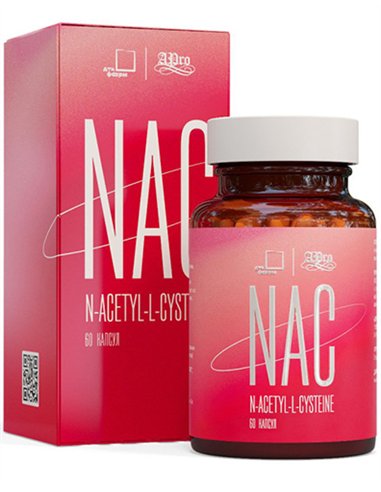


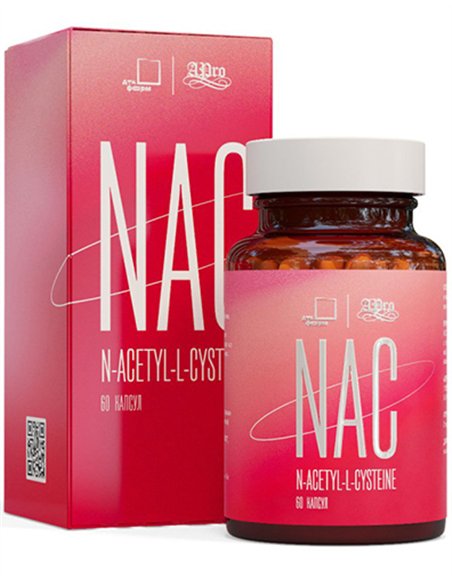
NAC (A-Pro line) is a product containing N-acetyl cysteine for detoxification, enhancing antioxidant potential, and protecting cells from free radicals, toxins, heavy metals, and alcohol. It helps ease breathing during acute respiratory infections and destroy bacterial and fungal biofilms.
N-acetyl cysteine (NAC) from the A-Pro line is a derivative of L-cysteine and a precursor to glutathione.
Glutathione is one of the main cellular antioxidants, protecting cells from a wide range of pathogenic factors: from reactive oxygen species generated within the cell and free radicals to toxins, heavy metals, and alcohol.
N-acetyl cysteine (NAC) is an effective way to restore the cellular antioxidant glutathione. It serves as a source of cysteine, which is necessary for glutathione synthesis.
Glutathione is formed from cysteine, glutamate, and glycine. Cysteine has the lowest intracellular concentration, which is the rate-limiting factor for glutathione synthesis. NAC is more stable to oxidation and has significantly better bioavailability than L-cysteine. Upon entering cells, N-acetylcysteine (NAC) is rapidly hydrolyzed to cysteine, which can then be used for glutathione synthesis.
Excess NAC not involved in glutathione synthesis is converted into intermediates in the Krebs cycle and supports mitochondrial bioenergetics, which increases ATP levels in hepatocytes (liver cells).
NAC modulates oxidative stress and other pathophysiological processes (mitochondrial dysfunction, apoptosis, inflammation).
Recently, research into the mechanisms of NAC action has expanded its clinical applications.
Oral administration of NAC is well tolerated and safe, even at high doses.
Intoxications
NAC can be used as an antidote for poisoning by paracetamol (acetaminophen), the herbicide paraquat, fungal toxins, hydrocarbons (chloroform, carbon tetrachloride), and a number of other molecules. It also acts as an antidote for heavy metal ion intoxication (lead, cadmium, chromium, and mercury).
Mitochondria
Glutathione effectively neutralizes excess free radicals within mitochondria. N-acetylcysteine (NAC) is a bioavailable donor of cysteine, which is a critical component of the mitochondrial respiratory chain complexes.
Biofilm Disruption
NAC disrupts bacterial biofilms, helping eliminate bacteria from the body. Its mechanism of action is not yet fully understood. One possible hypothesis for how NAC disrupts biofilms is that it may inhibit the production of mucus, which is necessary for bacterial biofilm production.
Respiratory Diseases
In respiratory diseases, NAC may improve mucus rheology, enhance respiratory function by increasing alveolar surfactant levels, exert antimicrobial and antibiofilm effects against certain respiratory pathogens, influence inflammatory pathways, and help with chronic obstructive pulmonary disease (COPD).
NAC's mucolytic effect is due to its ability to break disulfide bonds in cross-linked mucins, thereby reducing mucus viscosity.
Neuropsychiatric Disorders
NAC indirectly affects neurotransmitters such as glutamate and dopamine. By modulating glutamate homeostasis, it can influence conditions associated with impaired glutamate homeostasis, including drug addiction, chronic neuropathic pain, depression, schizophrenia, bipolar disorder, and neurodegenerative changes.
NAC alleviates chronic pain by enhancing endogenous activation of mGlu2 receptors, activating matrix metalloprotease type 9, and reducing p38 MAP kinase phosphorylation in the spinal cord. Data from several controlled and uncontrolled studies of oral administration of NAC at a dose of 1 g twice daily have shown a beneficial effect on the depressive component of bipolar disorder during the maintenance phase and in schizophrenia.
Other potential applications
Studies have demonstrated the potential of NAC for contrast-induced nephropathy, retinitis pigmentosa, and for facilitating renal clearance of spike protein in post-COVID patients.
Important!
Concomitant use with the following medications is not recommended:
cough suppressants (suppression of the cough reflex may lead to accumulation of bronchial secretions);
oral antibiotics, as they may decrease the antibiotic's activity (there should be at least a 2-hour interval between NAC and antibiotics);
nitroglycerin, as it may cause hypotension.
In case of bronchial asthma, NAC should only be taken under medical supervision! Caution is also recommended for patients with peptic ulcer disease or a history of this condition.
Contraindications: children under 2 years of age, pregnancy, breastfeeding, and hypersensitivity to the active ingredient.
Directions for use: Take one capsule twice daily 30-40 minutes before meals.
Ingredients: Each capsule contains 600 mg of N-acetylcysteine and HPMC (hydroxypropyl methylcellulose).
Packaging: Glass bottle.

Tap to zoom