سلة الشراء
لا توجد أية عناصر أخرى في عربة التسوق




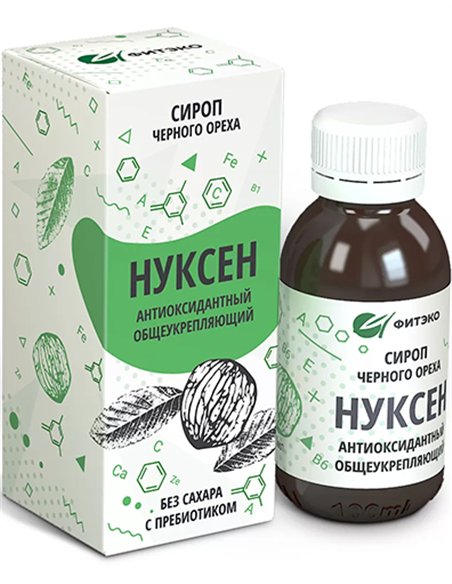
Ingredients: Black walnut extract, chicory syrup (inulin).
Organoleptic properties (taste, smell, color) may vary between batches, but this does not affect the balm's properties. These properties are due to the natural properties of the plant material (growing region, weather conditions, etc.).
Black walnut is a powerful antioxidant and natural immunomodulator. It effectively increases the body's resistance to viral, fungal, infectious, and oncological diseases. It promotes comprehensive cleansing of the body from parasites and their waste products, helps restore impaired organ and system function, stimulates metabolic processes, lowers blood sugar and cholesterol levels, compensates for iodine deficiency, and has general strengthening, antitumor, antiparasitic, antifungal, antihistamine, blood-purifying, and anti-inflammatory properties. It is a source of essential biologically active substances, vitamins, and macro- and microelements.
Prebiotic (inulin) - stimulates the reproduction and growth of beneficial bifidobacteria, normalizes digestion and intestinal microflora.
Scope: prevention of influenza, acute respiratory infections, acute respiratory viral infections, bronchitis, tonsillitis; prevention of gastric ulcers and duodenal ulcers, chronic gastritis, intestinal dysbiosis, chronic colitis, hepatitis; helminthic infestations, herpes infection; immunodeficiency states, allergies; eczema, neurodermatitis, psoriasis, dermatitis, herpes, fungal infections; prevention of diabetes mellitus; hypothyroidism; inflammatory diseases of the female reproductive system, hormonal imbalances, ovarian cysts, fibroids, erosion; hypotension, hypertension, arrhythmia, circulatory disorders, consequences of strokes, heart attacks; Arthritis, arthrosis, gout, bursitis, osteochondrosis, intervertebral disc herniation; chronic pyelonephritis, cystitis, urethritis, prostatitis, and prostate adenoma.
It is non-toxic, making black walnut suitable for use by cancer patients undergoing chemotherapy.
Chemical composition of black walnut fruit: organic acids (malic, citric), gallic acid, ellagic acid, amino acids, tannins, coumarins, high levels of vitamins A and C, E, PP, and B vitamins (B1, B2, B3, B5, B6), carotenoids, flavonoids (quercetin, hyperiside, catechin, kaempferol), quinoids (juglone, hydrojuglone), tannins, minerals (iron, potassium, calcium, magnesium, sodium, fluorine, iodine, manganese, zinc, phosphorus, copper, boron, molybdenum), essential oils, chlorophyll.
Thanks to its rich composition of biologically active substances, it has:
Powerful antiparasitic and antifungal effects due to the high content of bitter glycosides, tannins, and juglone—a unique biologically active substance in black walnut, a natural antibiotic that inhibits the growth and development of bacteria, viruses, and fungi. It also has a pronounced antihelminthic effect (removing parasites and their larvae from the blood, intestines, liver, and the entire body).
The oncoprotective effect of black walnut's biologically active substances—juglone, quercetin, ellagic acid, and tannin—is due to their broad spectrum of action. They stimulate the immune system to destroy cancer cells, prevent the formation of new blood vessels that feed tumor tissue, trigger the self-destruction mechanism of cancer cells, inhibit their division, and help the liver destroy and remove carcinogens from the blood.
Flavonoids (hisperidin, luteolin) provide antioxidant benefits, stimulating microcirculation and toning capillary walls. Thanks to its antioxidant properties, black walnut protects the body from the harmful effects of an environmentally unfriendly environment—free radicals (unstable atoms)—sourced from ultraviolet light, cigarette smoke, smog, and stress. Excess free radicals are dangerous because, when formed during metabolism, they can damage cell membranes and even the cell nucleus, which stores DNA.
The rich content of vitamins, minerals, and amino acids provides a general strengthening and tonic effect, making black walnut essential for those who are debilitated, sick, or suffering from vitamin deficiencies. The organic acids in black walnut provide trace elements and have a detoxifying effect. Vitamin A increases resistance to infections, is involved in the regulation of protein synthesis, oxidation-reduction processes, the function of cellular and subcellular membranes, promotes normal metabolism, influences the formation of bones and teeth, has the ability to slow down the aging process and promotes the growth of new cells.
The antimicrobial and wound-healing properties are due to the combination of juglone, tannins, iodine, ellagic acid, and vitamin C. This provides reliable protection against viral and bacterial infections, making black walnut extract suitable for therapeutic and prophylactic use in all inflammatory conditions, including acute respiratory infections, upper respiratory tract diseases, bronchitis, gastrointestinal tract diseases, and liver diseases. Thanks to its antimicrobial properties, the balm helps normalize the microflora not only of the intestines but also of the oral cavity and gums.
The antiseptic and anti-inflammatory effects are provided by organic acids, tannins, juglone, ellagic acid, and quercetin. The high content of ascorbic acid in black walnut promotes tissue regeneration, allowing it to be used to treat many joint conditions (arthritis, arthrosis, gout) and to reduce inflammation associated with osteochondrosis and radiculitis. The balm's high vitamin C content provides an immunomodulatory and anti-allergic effect. It stimulates the immune system, normalizes vascular permeability, increases the body's reactivity to infections, improves liver and kidney function, and stimulates testosterone synthesis. Tannins and organic acids stimulate the production of T-lymphocytes. The balm's immunomodulatory effects manifest at a deep level—at both the cellular and humoral levels.
The combination of flavonoids, organic acids, especially omega-3, vitamin C, rutin (vitamin P), coumarins, potassium, sodium, magnesium, iron, propylene glycol, and B vitamins provides a hypotensive and antispasmodic effect. The magnesium found in black walnut, unlike many other foods, is absorbed almost completely, dilating blood vessels and lowering blood pressure. Test results have shown that the flavonoid content of black walnut increases the amplitude of heart contractions and slows their rate.
It has an antidiabetic effect with a clear hypoglycemic and hypocholesterolemic effect, lowering blood sugar and cholesterol levels, normalizing blood pressure, improving pancreatic function, and regulating carbohydrate and lipid metabolism.
It has a positive effect on the endocrine system. Black walnut is a rich source of iodine, making it successfully used to treat metabolic disorders and thyroid disease.
Directions: Take twice daily with a small amount of water, 30 minutes before meals. Adults: 5 ml, children 3 years and older: 2.5 ml. Duration of treatment: 25 days. If necessary, repeat the treatment after a 14-day break.
Contraindications: individual intolerance to the components, elevated iodine levels in the body, and concomitant use with iodine-containing medications.
Indigestive discomfort may occur in cases of hypersensitivity to the prebiotic (inulin). Increased gas production during the first few days of use indicates a prebiotic effect and the growth of beneficial microflora. Within 5-7 days of regular use, the digestive system will adapt and gas production will normalize. Otherwise, discontinue use of the syrup.
After opening, refrigerate the bottle for no more than 1 month.
This is not a medicine. Consult a doctor before use.

7930069040491
Tap to zoom