سلة الشراء
لا توجد أية عناصر أخرى في عربة التسوق



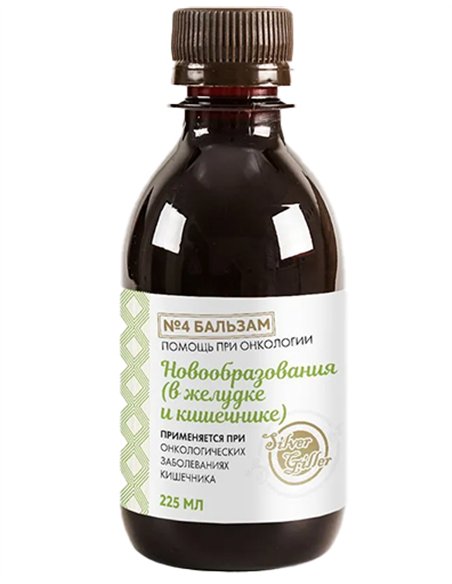
BALM #4 "Oncology Help" (colon cancer) is a phytocomplex based on medicinal plant materials, aimed at improving the functional state of the intestinal tract. It has an intensive effect on inflammatory and infectious processes, and normalizes hormonal balance.
The herbs included in the balm have anti-inflammatory, analgesic, and antitumor properties. BALM #4 "Oncology Help" (colon cancer) contains a rich vitamin and mineral complex, antimetabolites, and resembles a common nutrient absorbed by cancer cells. It is aimed at stopping and slowing the growth of cancer cells, damaging the DNA structure, and inhibiting and completely stopping the division of altered cells.
This complementary formula has a regulating and restorative effect on gastrointestinal dysfunction, normalizing and preventing gastrointestinal diseases, and eliminating viral and infectious processes. It is used in combination therapy for the treatment of benign and malignant intestinal tumors.
The organic formula of Balm No. 4 "Oncology Help" (colon cancer) is designed to improve health, youth, and longevity, providing an effective restorative effect and is recommended for:
- Benign and malignant intestinal tumors
- Intestinal cysts
- Diffuse intestinal polyposis
- Villous tumors
- Metabolic disorders.
Key properties:
- Promotes the destruction of tumor cells
- Has a cytotoxic effect on tumor cells
- Exhibits a resorptive and restorative effect.
Balm No. 4 "Oncology Help" (colon cancer) has an additional regulating effect on the immune, cardiovascular, digestive, and genitourinary systems, activates the cleansing function of the kidneys, and prevents intoxication and blood imbalances.
Ingredients: Astragalus, Lesser Periwinkle, Cowberry (leaf), Marsh Bean, Heather, Red Geranium, St. John's Wort, Marsh Marigold, Red Clover, Burdock (root), Buttercup, Dandelion (root), White Mistletoe, Bryony, Bedstraw, Plantain (leaf), Shepherd's Purse, Wormwood, Rhodiola Rosea, Salsola Colli, Marsh Cudweed, Meadowsweet, Milk Thistle (root), Yew, Bearberry, Yarrow.
The balm's complex action is due to its properties:
Astragalus - the plant's antitumor effect is due to the presence of isoflavone, which inhibits cancer cell growth. Furthermore, astragalus removes excess nitrogenous compounds (urea, creatinine) from the blood.
Minor periwinkle - contains the alkaloid vincamine and its derivative vinpocetine, which are structurally similar to vinblastine, vinorelbine, and vincristine, which are antitumor alkaloids. They have long been used in international medical practice for the treatment of cancer. Drugs based on these three alkaloids prevent cancer cell proliferation and induce programmed cell death, or apoptosis.
Lingonberry (leaf) - has diuretic properties, removing excess fluid and toxins from the body. Lingonberry also contains procyanidins, which are effective against several types of cancer. Procyanidins have the ability to prevent tumor growth and cause the death of affected cells.
Marsh trefoil - an indispensable bowel aid as a mild laxative with diuretic and sedative properties. Marsh trefoil is a necessary ingredient in choleretic tea, promoting the elimination of toxins from the body.
Heather - has disinfectant, antiseptic, wound-healing, cleansing, anti-inflammatory, and astringent properties, and is widely used in the treatment of gastritis (with high acidity), cholecystitis, and colitis.
Red geranium is used in herbal therapy for cancer and internal bleeding. The plant's healing, disinfectant, and antibacterial properties are used for all types of oncological diseases.
St. John's wort - due to its tannins and flavonoids, it is used for diseases of the digestive tract and biliary tract. It is effective for headaches, as part of complex and systemic treatment for cancer, cystitis, rheumatism, and hemorrhoids. St. John's wort, a natural antibiotic, can benefit patients with primary squamous cell carcinoma and is used as part of combination therapy for benign and malignant intestinal tumors and rectal polyps.
Marsh marigold is a natural antiseptic. It is indicated for inflammation, burns, and skin wounds, as it has wound-healing and antimicrobial properties. It copes well with wounds on mucous membranes, cleanses, and disinfects.
Red clover has oncoprotective properties and is actively recommended by herbalists for breast, ovarian, and lymphatic cancer. It significantly purifies the blood and inhibits the growth of abnormal cells.
Burdrop (root) has diuretic, choleretic, anti-inflammatory, diaphoretic, and antimicrobial properties. It stimulates mineral metabolism, promotes glycogen deposition in the liver, and improves the insulin-producing function of the pancreas. In oncology, burdock root extract helps alleviate symptoms and increase the body's resistance to disease. Its natural antioxidants help strengthen the immune system and suppress tumor growth.
Buttercup is currently used in folk medicine as an analgesic, wound-healing, and tonic, and relieves severe pain. Buttercup has been used in the treatment of colds, cancer, and infectious diseases, including influenza, gout, ascites, cystitis, pancreatic cancer, and colon cancer.
Dandelion (root) is used in combination therapy for leukemia, pancreatic cancer, breast cancer, and prostatitis. The antioxidants found in dandelion roots can neutralize harmful free radicals and reduce the risk of heart disease and cancer.
Mistletoe - Mistletoe therapy is one of the most important herbal treatments. Preparations containing mistletoe strengthen the body's defenses, reduce the side effects of chemotherapy and radiation therapy, and improve quality of life. Mistletoe, like modern conventional targeted drugs, is capable of directly influencing intracellular targets and processes involved in tumor growth. Mistletoe has previously been used in medications for the treatment of radiculitis, neuritis, lumbago, and plexitis. Experiments have shown it to have antitumor properties. It also has hemostatic and analgesic properties.
Galstrife - in medicine, it is used directly or in combination with other herbs as a sedative and pain reliever, for kidney problems, stomach pain, diarrhea, and jaundice. In oncology, it is used as an antitumor agent and to increase white blood cell levels.
Plantain (leaf) - in scientific medicine, it is used as an antiseptic, anti-inflammatory, hypnotic, and wound-healing agent. It helps normalize blood pressure and lowers cholesterol. Plantain acts as a catalyst in oncologic herbal teas, increasing the effectiveness of medications used in the treatment of cancer.
Shepherd's purse is used to treat numerous gastrointestinal conditions. Widely used in oncology and gynecology, it effectively cleanses the blood of toxins and waste products.
Wormwood contains artemisinin, a substance found in common wormwood, and can effectively combat a variety of serious illnesses and ailments, from joint pain to cancer.
Rhodiola rosea is a phytoadaptogen and has antitumor properties. It enhances the immune response to tumor cells, inhibits the division of abnormal cells, and prevents metastasis.
Hill saltwort is an effective hepatoprotector, essential for the prevention and treatment of liver diseases, protecting and restoring liver cells in acute and chronic conditions, fatty liver of various etiologies, drug and alcohol intoxication, and cirrhosis. It stimulates bile flow and prevents gallstone formation. It is an indispensable aid for the liver, especially during chemotherapy or radiation therapy.
Marsh cudweed has anti-inflammatory and wound-healing properties, acts as a choleretic, stimulates intestinal peristalsis, and helps the body eliminate toxins and harmful substances.
Meadowsweet inhibits the development of cancer cells and has an antitumor effect. Meadowsweet, a metabolic corrector and adaptogen, reduces pain and inflammation, and promotes slower blood clotting and the resorption of fresh blood clots. In experiments with chemical carcinogens, meadowsweet reduced the incidence of breast, colon and rectal, and brain and spinal tumors, completely inhibiting the growth of lymphoblastoid cells at a certain concentration. Its in vitro efficacy was comparable to that of chemical antitumor drugs. Furthermore, meadowsweet can be safely taken for years, whereas synthetic substances, while suppressing one type of cancer, can stimulate tumor development in other organs.
Spiny thistle (root) has many beneficial properties: bactericidal, cardiotonic, anti-inflammatory, hemostatic, diuretic, and antitumor. In folk medicine, infusions and decoctions of spiny thistle are used for malignant tumors, especially uterine cancer, and to prevent metastases after tumor removal. Taking these preparations alleviates the depressed state of patients.
Yew's rich composition determines its broad range of medicinal properties, including cytotoxic, antileukemic, anti-inflammatory, analgesic, antipyretic, antimicrobial, antifungal, and anthelmintic effects. It also exhibits strong anti-tuberculosis and anti-HIV activity, and is responsible for strengthening bone structure in osteoporosis. The active ingredients in yew trigger the process of necrosis within cancer cells. It is used in the complex treatment of leukemia, Hodgkin's lymphoma, lymphoma, lung cancer, esophageal cancer, gastric cancer, pancreatic cancer, colorectal cancer, sarcoma, osteosarcoma, breast cancer, prostate cancer, ovarian cancer, and skin cancer.
Bearberry has a fairly powerful diuretic effect and also exhibits disinfectant properties. It has a pain-relieving effect in malignant tumors and articular rheumatism, restores normal urination, and reduces inflammation. Its diuretic and antiseptic properties promote cleansing of the body by removing harmful and dangerous substances with fluid.
Yarrow is often used by cancer patients and those with a genetic risk. During long-term chemotherapy, yarrow is used in decoction form to support bodily functions. It effectively removes chemicals and waste products from the body.
Does not contain: medicinal, genetically modified, or chemical substances, hormones, or preservatives. It is non-addictive and has no adverse side effects. It does not contain GMOs, gluten, or wheat. It is not a medicine.
Contraindications: pregnancy, breastfeeding, children under 18 years of age. Hypersensitivity to any of the components of the product. Individual intolerance.
Directions and dosage: Take orally, depending on your condition, 1-2 teaspoons twice daily, 30 minutes before meals. Shake before use. The course of treatment is 30 days. The course can be repeated.

4673764175138
Tap to zoom